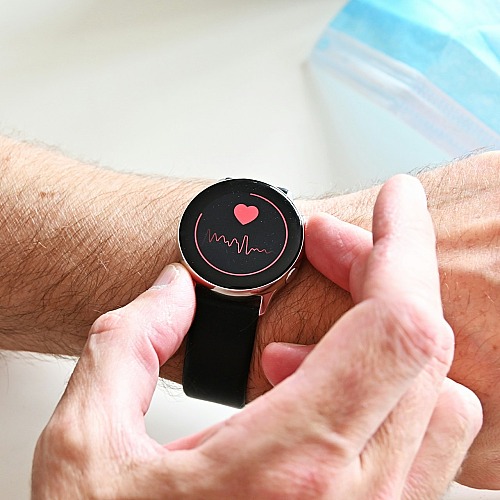
Most men measure fitness by what they can see in the mirror or what they can put up on the bench. I have a tendency to fall into that trap, and I’m a health and physical education teacher. I lecture kids about health metrics every day for a living. Truthfully, neither of these status symbols says much about how your heart performs, how your body handles metabolic stress, or how well you recover.
Cardiovascular fitness, metabolic health, and recovery quality play a role in everything from your next max lift to your long-term health outlook. Here are seven men’s fitness metrics that give you a more targeted read on your overall fitness level.
Men’s Fitness Metrics Quick-Reference Guide
Metric | What It Measures | Healthy Range (Men) | How to Track |
|---|---|---|---|
Resting Heart Rate | Cardiovascular efficiency | 60–100 bpm (fitter = lower) | Wearable, chest strap, manually |
Heart Rate Variability | Stress resilience, recovery | Higher = better (track personal trend) | Wearable, chest strap |
VO2 Max | Cardiorespiratory fitness | Varies by age; higher = fitter | Wearable estimate, lab test |
Waist-to-Height Ratio | Central obesity, metabolic risk | Below 0.5 | Tape measure + height |
Blood Pressure | Cardiovascular risk | At or below 120/80 mmHg | Home monitor |
Full Lipid Screening (incl. Lp(a)) | Cholesterol, genetic CVD risk | LDL <100 mg/dL; Lp(a) <125 nmol/L | Blood test |
Sleep Stages | Recovery quality | ~15–25% deep sleep | Wearable |
1. Resting Heart Rate
Your resting heart rate (RHR) reflects how hard your heart works when you’re doing nothing. The normal adult range is 60–100 bpm, but conditioned men often sit in the 50s or lower. An elevated RHR correlates with higher cardiovascular disease risk; a lower RHR suggests improved efficiency. In the Fenland Study (2023), researchers analyzed resting heart rate and fitness data from more than 10,000 adults. In a follow-up subsample of roughly 6,600 participants tracked over a median of six years, a rising RHR consistently corresponded with declining cardiorespiratory fitness.
Next step: Measure your RHR in the morning before getting out of bed, lying still for about a minute after waking. Place two fingers (not your thumb) on the inside of your wrist, and count beats for 30 seconds, then double it. If you use a fitness tracker, its overnight RHR reading works, too. Check for seven days, get an average, then recheck monthly. A downward trend reflects cardiovascular adaptation; a sustained rise may point to overtraining, poor recovery, or accumulated stress.
2. Heart Rate Variability
Your heart does not beat like a clock. The time between beats shifts from one to the next, and that variation is your heart rate variability (HRV). While you typically want a lower resting heart rate, higher variability is a good thing. When your nervous system is balanced, the gaps between beats vary more. When you are stressed or under-recovered, the rhythm flattens out. Where RHR reflects long-term fitness, HRV tells you how ready you are to perform today.
Next step: HRV requires a chest strap with a compatible app (such as Elite HRV or HRV4Training) or a wearable that tracks it.
Measure in the morning before getting out of bed, same as RHR.
Record daily for one week to establish your personal baseline.
Track week-over-week averages, not single readings. A consistent drop may mean you need to reduce training volume or address sleep and stress. A 2024 systematic review in Life confirmed that targeted stress reduction significantly improved HRV in cardiovascular patients.
3. VO2 Max
VO2 max measures the maximum oxygen your body can use during intense exercise. The Copenhagen Male Study, published in the Journal of the American College of Cardiology, tracked 5,107 men over 46 years and found that each 1 ml/kg/min increase in VO2 max added 45 days of life expectancy. The fittest men lived nearly five years longer.
Next step:
If you wear a fitness tracker, use its VO2 max estimate as a benchmark.
Without one, try the Cooper Test: Run as far as you can in 12 minutes on a flat surface, and enter your distance.
To improve it, add two sessions per week of the Norwegian 4x4 protocol (four minutes at 85–95% of your max heart rate, three minutes easy, repeated four times).
4. Waist-to-Height Ratio
Waist-to-height ratio (WHtR) reflects central obesity, which carries greater cardiovascular and metabolic risk than overall weight. A 2025 study from the University of Pittsburgh and UPMC, published in The Lancet Regional Health, found WHtR outperformed every other body-size measure as a cardiovascular predictor after adjusting for standard risk factors.
Next step:
Stand upright, exhale normally (do not suck in), and wrap a tape measure around your waist at the navel.
Divide that number by your height in the same units. A WHtR above 0.5 warrants attention.
Reassess monthly alongside any changes to your strength training or nutrition.
5. Blood Pressure
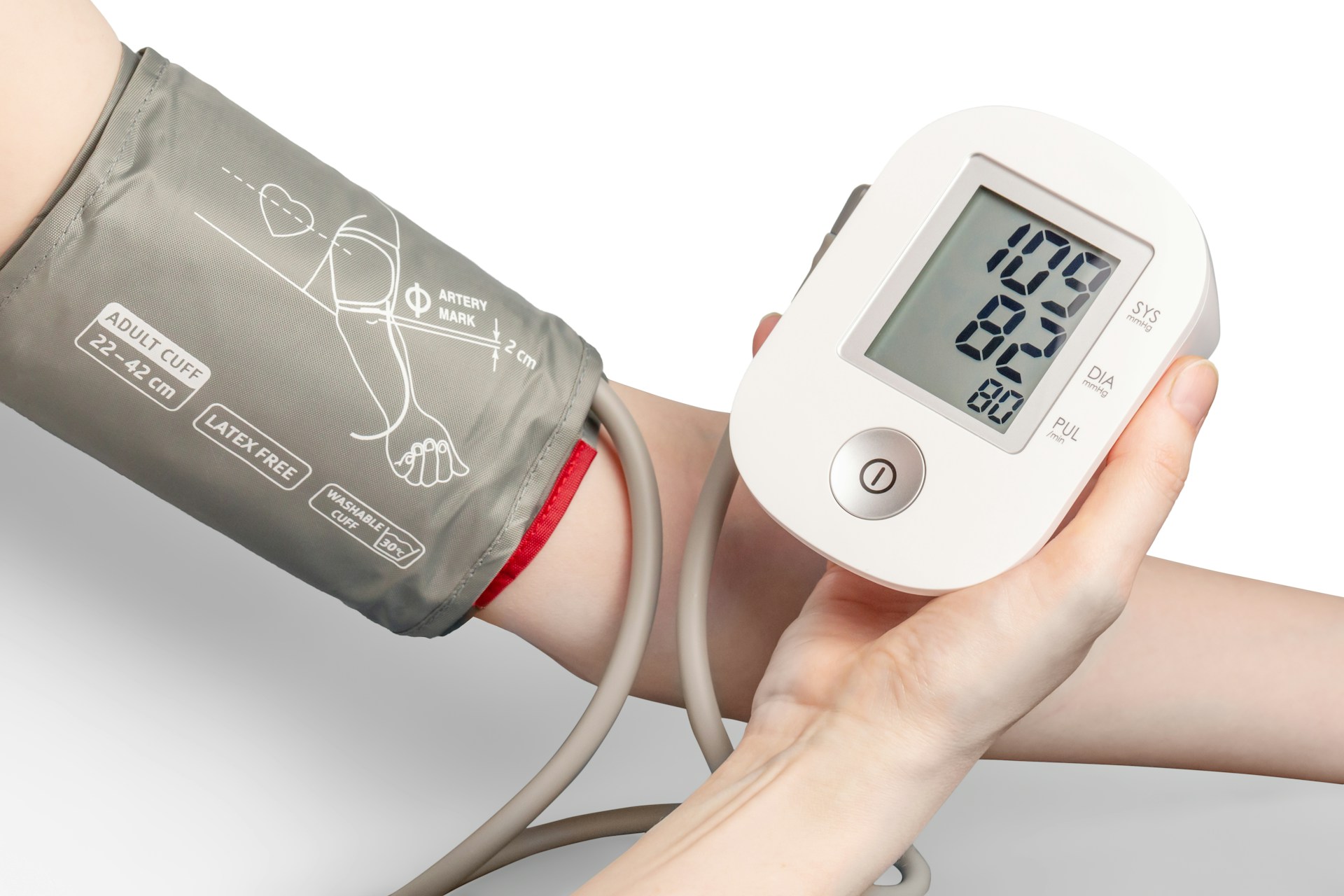
Nearly half of US adults have hypertension, according to CDC data, and most younger men never check. The 2025 AHA/ACC Guideline calls hypertension the leading modifiable risk factor for heart disease, stroke, and heart failure. The benchmark is 120/80 mmHg or lower.
Next step:
Pick up a blood pressure monitor with an upper-arm cuff.
Sit quietly for five minutes with feet flat, back supported, and the cuff on bare skin at heart level.
To set your baseline, take two readings one minute apart, morning and evening, for seven days, and average the results. After that, check weekly. If your average trends above 120/80, talk to a provider.
6. Full Lipid Screening
The March 2026 ACC/AHA Dyslipidemia Guideline now recommends all adults receive at least one lipoprotein(a) test in their lifetime, alongside standard LDL and HDL screening. Lp(a) is genetic, barely budges with diet or exercise, and raises cardiovascular risk independently. Levels at or above 125 nmol/L carry roughly a 40% increased risk of heart attack or stroke. At 250 nmol/L or higher, that risk approximately doubles. Most standard lipid panels do not include it unless you ask.
Next step:
At your next blood draw, ask specifically for a lipoprotein(a) test in addition to the standard lipid panel. Lp(a) only needs to be tested once; your level is genetically fixed.
Fast for 9–12 hours beforehand for the most accurate LDL reading.
The updated guidelines support earlier screening for men at high long-term risk, potentially starting at age 30.
7. Sleep Stages
Total sleep hours get attention, but deep sleep percentages reveal more about physical recovery. Growth hormone release peaks during deep sleep (Non-REM Stage 3), and a UC Berkeley study published in Cell mapped the brain circuits regulating this process, confirming that deep sleep drives muscle repair, bone density, and fat metabolism.
Next step: Tracking sleep stages requires a wearable or a dedicated sleep tracker (such as an Oura Ring or Apple Watch).
Review your sleep stage breakdown weekly, not nightly. Look for trends in deep-sleep percentage over time.
If deep sleep stays consistently below 15% or post-workout recovery stalls, start here. Cut screens an hour before bed, hold a consistent sleep and wake time, and drop your bedroom temperature to 65–68°F.
Owning the Numbers
Training without tracking these men’s fitness metrics is guessing. You would never load a barbell without knowing the weight, and you would never run a program without tracking your lifts. Your cardiovascular fitness, metabolic health, and recovery deserve the same precision. You don’t need to get obsessed with tracking all of them, though. Start with one or two that best fit your goals or health concerns, test them, and let the data guide your next move.
This article is for informational purposes only and does not constitute medical advice. Individual results may vary. Consult your doctor to determine which health metrics are most relevant to your goals, and discuss any concerns about cardiovascular or metabolic risk.







Leave a Comment
Your email address will not be published. Required fields are marked *