
I changed to stainless steel cookware, swapped out my old Tupperware for glass, and bought an expensive Berkey water filter. (Okay, truthfully, my wife did most of these things.) But I do track my macros, supplement strategically, and buy organic whenever possible. Like you, I’m trying to limit my exposure to toxins, but I recently realized I’m still wearing plastic against my balls for 16 hours a day.
Check your underwear label right now. If it says polyester, nylon, or spandex, you’re looking at a plastic-heavy blend. Polyester alone now accounts for 59% of global fiber production. Conventional underwear brands rely heavily on these petroleum-based blends, and that plastic is shedding microfibers with every stretch, step, and sit, according to a 2021 study published in Environmental Science & Technology.
NADS, Built From the Fiber Up
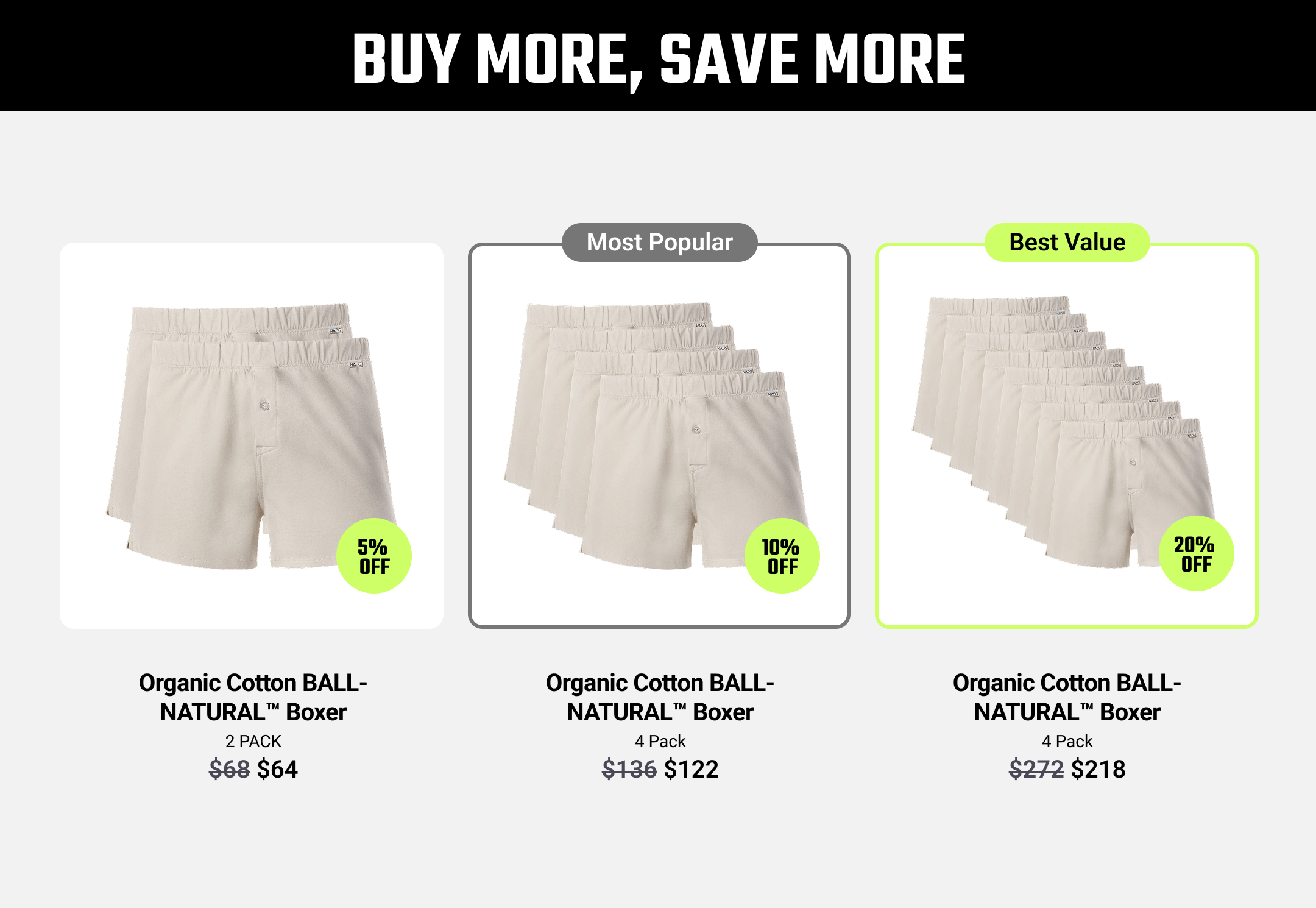
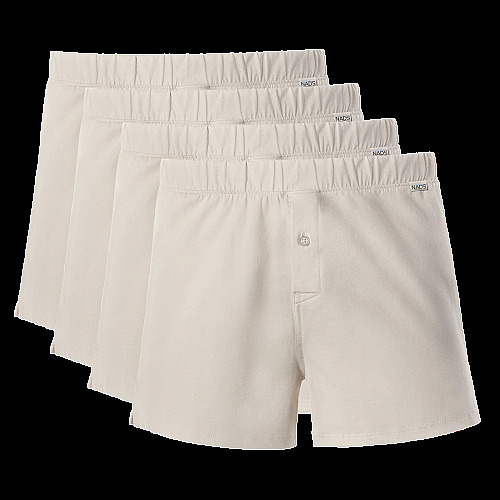
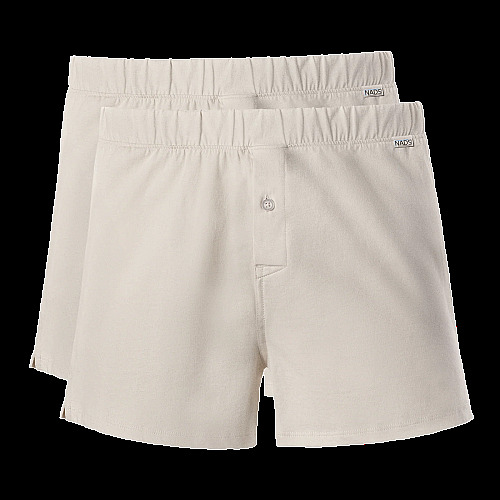
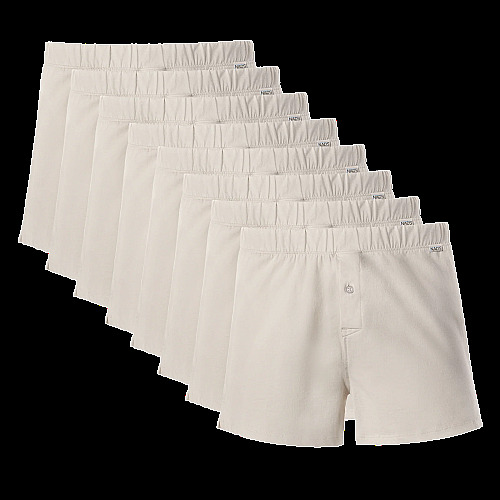
NADS makes organic cotton underwear specifically designed for men on an optimization journey. Every design detail, from the organic cotton-enclosed waistband to the tear-out tag, reflects that priority.
Key features:
Certified Organic Cotton
OEKO-TEX® Standard 100-certified dyes (tested against 100+ harmful substances)
Made in Turkey in ethically operated facilities
Made without the harsh chemicals found in conventional underwear
Ships from Kentucky in 4–7 business days
If you never gave your undercarriage wardrobe much thought, here are a few reasons why you should consider freeing the fellas in the near future.
What’s Hiding in the Fabric?
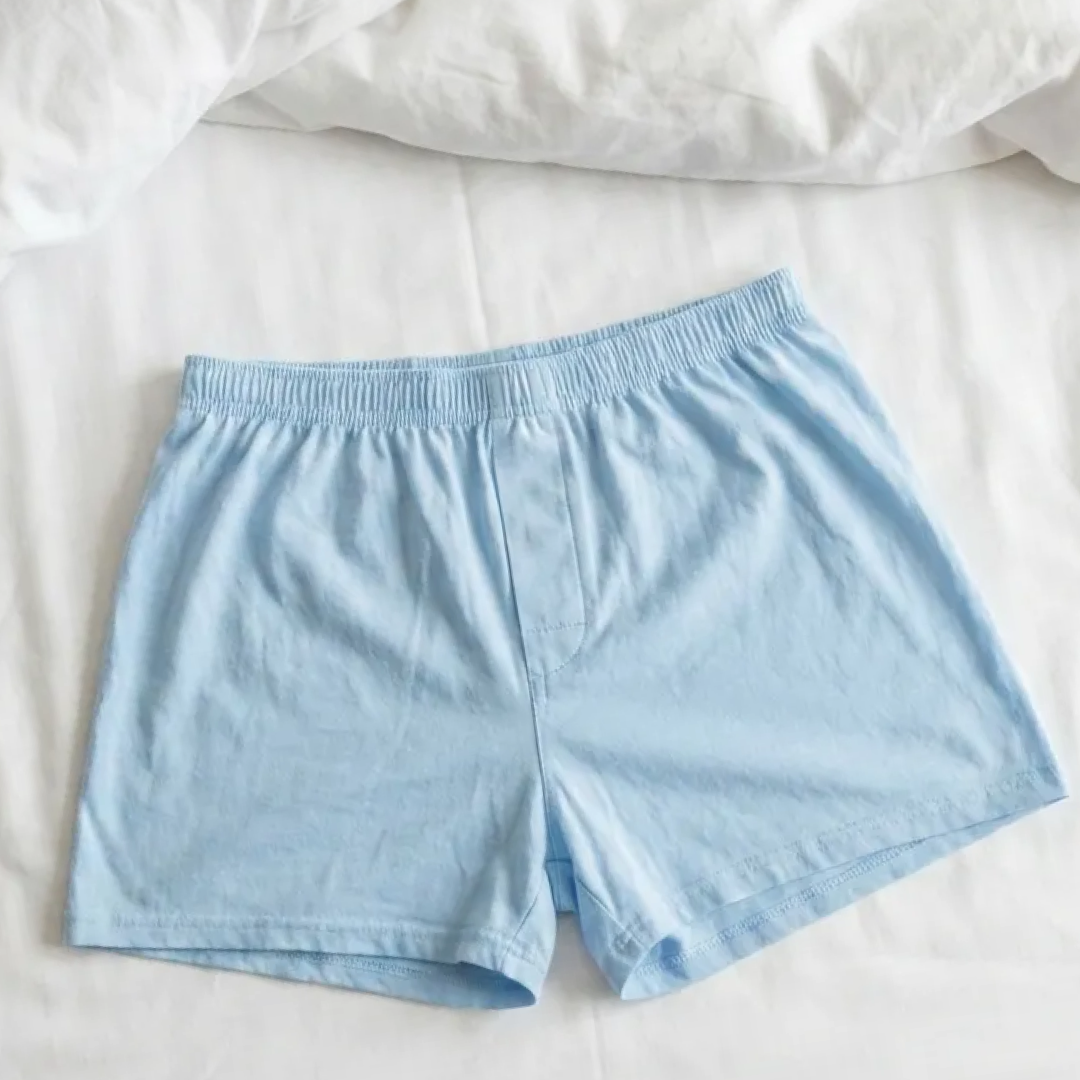
Conventional and recycled textiles contain chemical additives that can transfer to your skin during wear. A 2024 study published in Environmental Science and Pollution Research tested 57 clothing items and found BPA (bisphenol A) in 96% of samples and BPS (bisphenol S) in 100%. Recycled textiles, many containing recycled polyester as a primary fiber, showed nearly double the BPA levels of conventional fabrics.
The researchers calculated dermal exposure under two scenarios. For dry clothing, chemical exposure stayed below safety limits. But when simulating sweaty conditions, BPA exposure exceeded the European Food Safety Authority’s safety threshold by up to 570 times in some samples. The highest exposures came from sweat-dampened garments like T-shirts and socks, where prolonged skin contact amplified chemical transfer.
Your groin creates ideal conditions for chemical transfer. Heat, moisture, and friction all increase the rate at which chemicals move from fabric to skin. The scrotum’s thin, permeable skin compounds this effect. When you sweat through plastic-heavy underwear during an 8-hour workday, you’re maximizing exposure to these endocrine-disrupting compounds.
The Elephant in Your Boxers

A 2024 study found microplastics in every human testicle sample they tested. Polyethylene and PVC were the most common types. The researchers also found a correlation between higher PVC levels and lower sperm counts in dogs.
Global sperm counts have dropped by more than 50% since the 1970s. During that same period, plastic production exploded. There’s not enough evidence to say that microplastics in our systems are causing the decrease in fertility, but it’s a correlation that warrants further research.
Scientists also don’t know how these pesky particles end up in testicular tissue. They could get there through ingestion, inhalation, or absorption. The skin barrier blocks most plastic absorption, but there’s some concern about nanoparticles under a certain size, and more research is necessary. What’s clear is that they’re accumulating in an organ you’d prefer to stay clean.
Microplastics are everywhere, and you can’t avoid them completely. But it seems logical not to wrap your testicles in plastic if you have a better choice.
The BALL-NATURAL™ Alternative
Organic cotton breathes, allows moisture to pass through, and meets Global Organic Textile Standards. GOTS certification verifies that the material is produced without harsh pesticides or toxic chemical treatments.
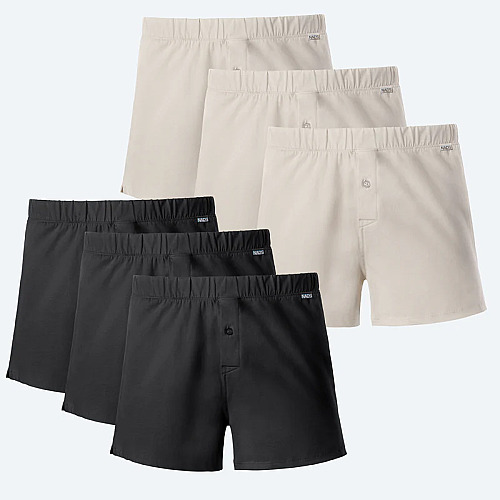
The difference in feel is immediate. GOTS organic cotton is softer than conventional cotton because it adheres to a stricter set of standards. Organic Cotton BALL-NATURAL™ Boxers are built with 100% GOTS-certified organic cotton, no elastane, no blends.While the Natural colorway is free of dyes, you can rest assured that the black option uses OEKO-TEX® Standard 100 certified dyes, tested against 100+ harmful substances.
Get What You Pay For

At $34 per pair, these Organic Cotton BALL-NATURAL™ Boxers cost more than conventional underwear. But the pricing reflects actual manufacturing costs for certified organic materials, ethical production, and rigorous testing. GOTS and OEKO-TEX® certifications require annual audits and testing, which budget brands skip entirely.
The durability factor changes the cost calculation. Conventional underwear typically lasts 6–12 months before the elastic degrades and the fabric pills. Organic cotton won’t shed microplastics the way plastic-heavy fabrics do, and it naturally softens with each wash rather than breaking down into plastic fragments.
The company reports having sold over 1,000,000 pairs, with a 94% satisfaction rate, suggesting most customers find the performance justifies the investment.
Making the Switch
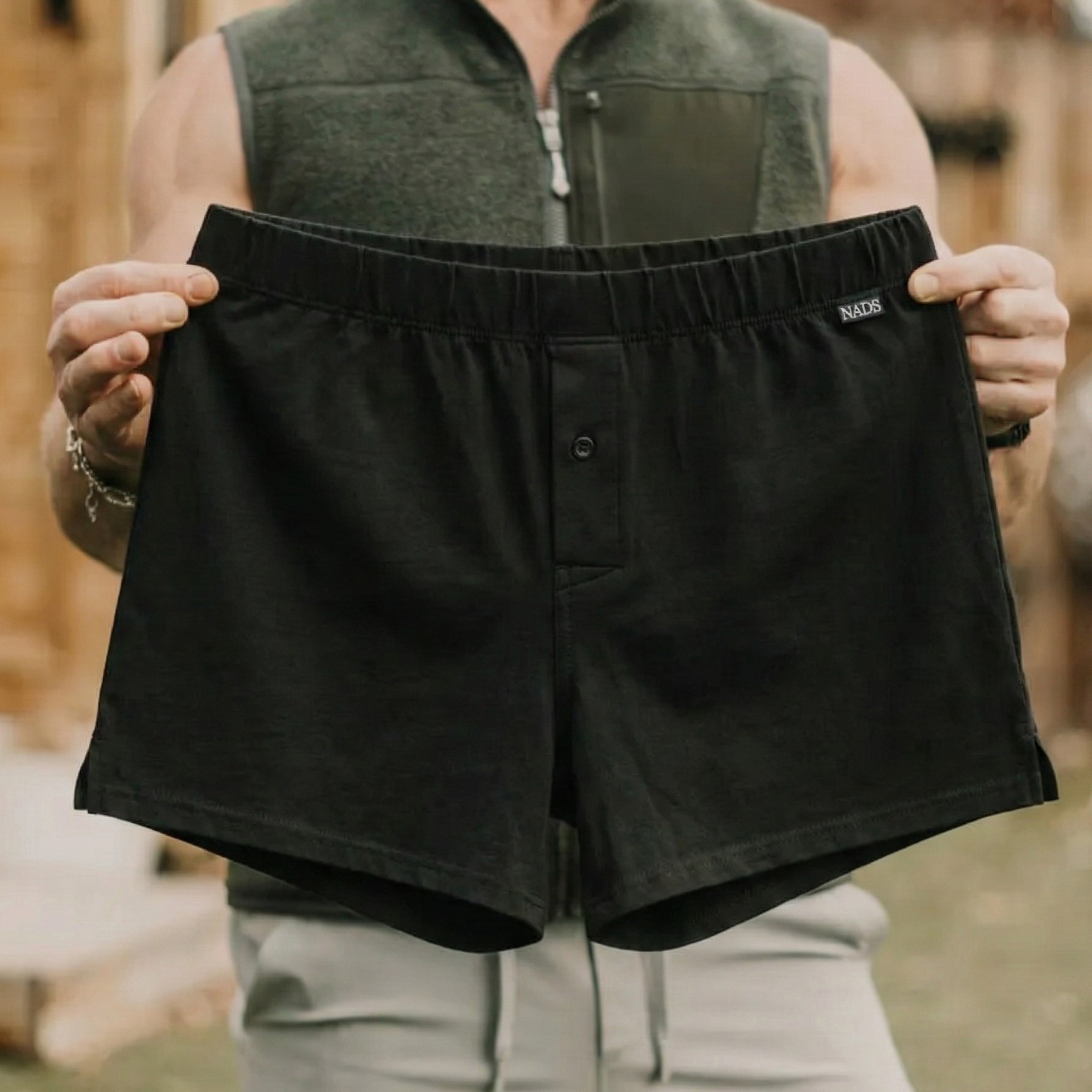
Swapping out your underwear is probably the easiest optimization you can make. It’s one more way to reduce your exposure to plastic-dominant fabrics where it counts most, and your underwear probably has holes in it anyway.
A single pair of Organic Cotton BALL-NATURAL™ Boxers runs $34. If you want to upgrade your entire underwear drawer, consider The Natural Baller bundle. At $173.40 (with free shipping), it brings the cost per pair down to $28.90, for a six-pair savings of 15%.NADS offers a fit satisfaction guarantee. If the size doesn’t work, they’ll exchange it. Plus, the fit is engineered to stay in place during activity without bunching or riding up. One customer put it this way: “Like sitting in a hammock on a nice summer day but just for your nads.”
Ready to ditch the polyester?
NADS underwear is designed to reduce chemical exposure, but it is not a medical treatment. Consult a healthcare provider for concerns about testosterone, fertility, or reproductive health. Individual results may vary.







Leave a Comment
Your email address will not be published. Required fields are marked *